

Quick answer: ask whether the gate is treated as machinery, how many safety devices it has, whether every gap is 100mm or less, how it is supported, how to open it by hand, whether it is signed, and who is responsible for its safety.
An electric gate is a great upgrade for security and convenience. It is also a machine, and a badly fitted one can injure someone. Before you sign off on a quote, these are the questions worth asking.
1. Is the gate treated as machinery?
Automated gates fall under UK machinery safety law, so the finished gate should carry the correct conformity marking (UKCA) and come with proper documentation. If an installer is vague about this, be wary.

2. How many safety devices will it have?
A safe automated gate should have more than one type of protection. That usually means non-contact sensors such as photocells, plus pressure or safety edges so the gate stops and reverses if it touches something. Ask where they will be fitted, and whether they work on both the opening and the closing movement.
3. Are the gaps small enough?
Gaps around the gate, the posts and the fittings should be no more than 100mm, because larger openings can create trapping or crushing points. Brick pillars, fences and walls next to a swinging leaf are common trouble spots.
4. How is the gate supported?
- Swing gates should have at least three hinges, or a robust tether, so the gate does not fall if one hinge fails.
- Sliding gates need solid stops at both ends so they cannot run off the track.
5. Can you open it by hand?
Power cuts happen. You should know how to switch to manual operation, and where the release key is kept.
6. Is it clearly signed?
People should be able to see that the gate is automatic.
7. Who is responsible when something goes wrong?
The person who last works on an automated gate is effectively responsible for its safety. Be cautious about low-cost conversion kits fitted to old manual gates, because many on the market do not meet the standard.
Why a made-to-measure gate helps
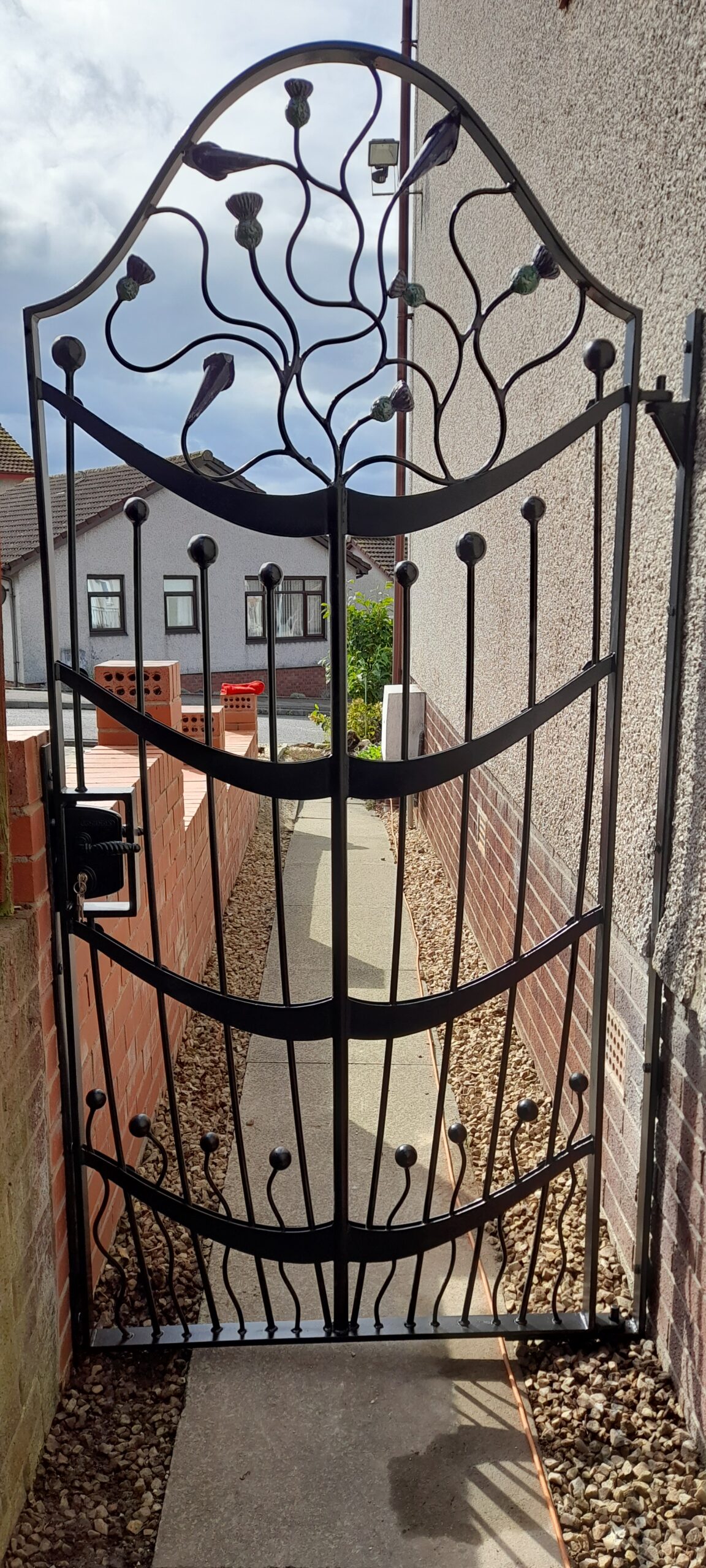
Safe automation is designed in from the start, not added on afterwards. A gate made to measure for your opening lets the posts, hinges, gaps and sensors be planned together. Iron Design By Rory makes custom gates and railings in wrought iron and steel. Tell Rory about your opening and what you have in mind.
Swing or sliding?
Swing gates suit drives with room for the leaves to open, and can look more traditional. Sliding gates suit tight spots or sloping entrances where swinging leaves would not clear, but need space beside the opening for the gate to travel. A site visit is the best way to decide, because the right choice depends on your drive, your gradient and your boundary walls.
How will you open it?
Remote fobs, keypads, intercoms and phone-based controls are all common. Think about who needs access, deliveries, and what you want to happen if someone loses a fob. Ask what the system does if the power fails, and whether a battery backup is available.
Looks and materials
A gate should suit the house. Steel can be shaped, welded and finished in almost any style, from simple bar designs to ornate scrollwork, and combined with timber infill if you want a softer look. A made-to-measure gate lets the design and the automation be planned together, so the motor and sensors are neatly built in, not bolted on.
Servicing
An automated gate is a moving machine that gets used every day. Ask about servicing and what happens if something needs repair, so you know who to call.
Frequently asked questions
Can I automate my existing gate?
Sometimes, but the gate has to be strong and well hung enough, and the result must still meet the safety standard. A made-to-measure gate avoids the problem.
What happens in a power cut?
A properly installed gate has a manual release. Make sure you are shown how it works.
Talk to Iron Design By Rory
Want a gate quote? Call Rory on 07792 484285, email irondesignbyrory@hotmail.co.uk, or request a free quote. The workshop is at Unit 7, Strathenry Mills, Glenrothes, KY6 3HA. See more finished work in our portfolio or on our services page.
Source: ECA: What electrical contractors need to know about gate safety.